Whitepaper
FarmChainDAO: a vertical farm in Portugal, funded and shared on-chain
1. Summary
FarmChainDAO buys land, produces food in Portugal and splits the profit with the people who funded it. The DAO owns the land and runs production with its own team. The investor does not lend to a grower: they hold a fraction of the asset and a fraction of the profit.
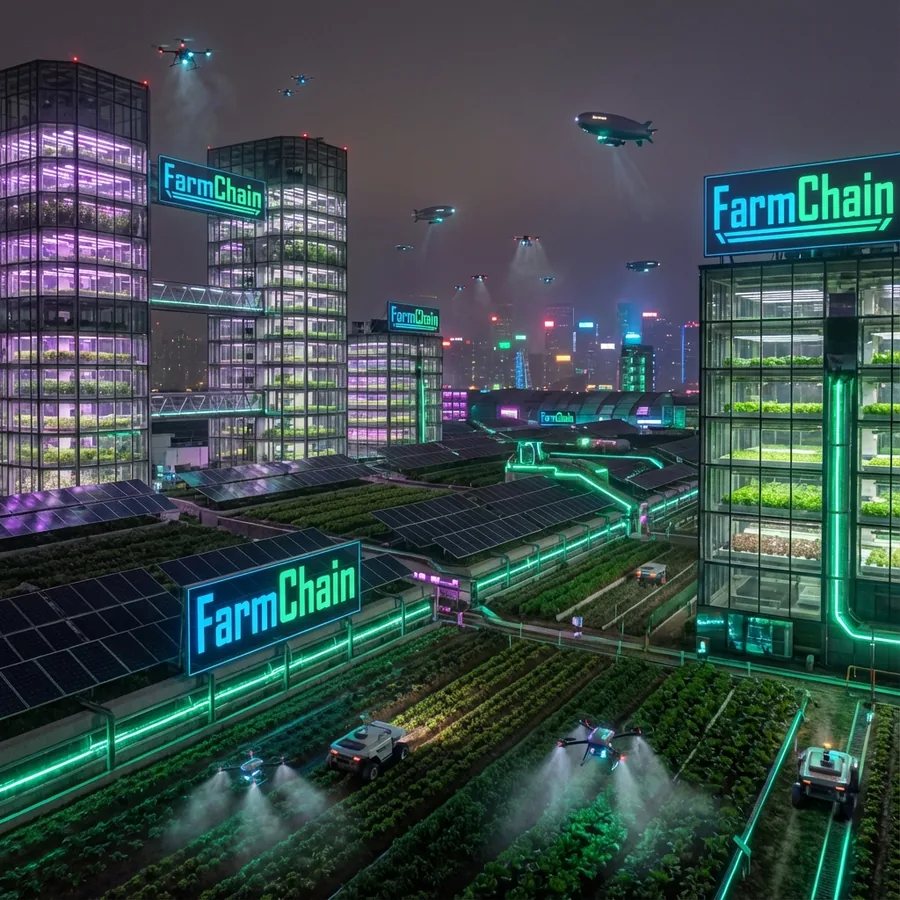
"We build the farms. You share the harvest."
There are two products. The Genesis Pass (1,000 units at 275 USDC) buys the land and base infrastructure and receives 10% of the net profit from all production, forever. Each vertical is sold separately as a production cycle, with published CAPEX and term, and pays 55% of its profit to the people who funded it. There are two: organic eggs first, microgreens after. 2% of all profit goes to social impact, with a report.
1.1 The land: a farm in Quintas da Torre, Fundão
Under a purchase-intent contract for €85,000: 7.46 hectares (74,600 m²) with its own water and a 78 m² ruin to rehabilitate. It is the asset the Genesis Pass buys. The deed will be published, with personal data redacted, as soon as the purchase closes in the name of the DAO's entity.
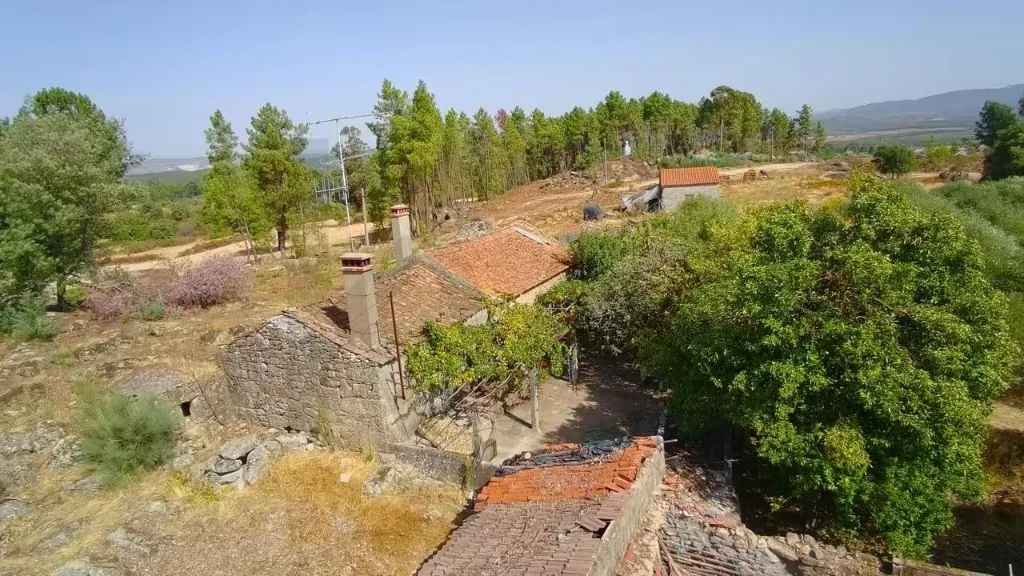
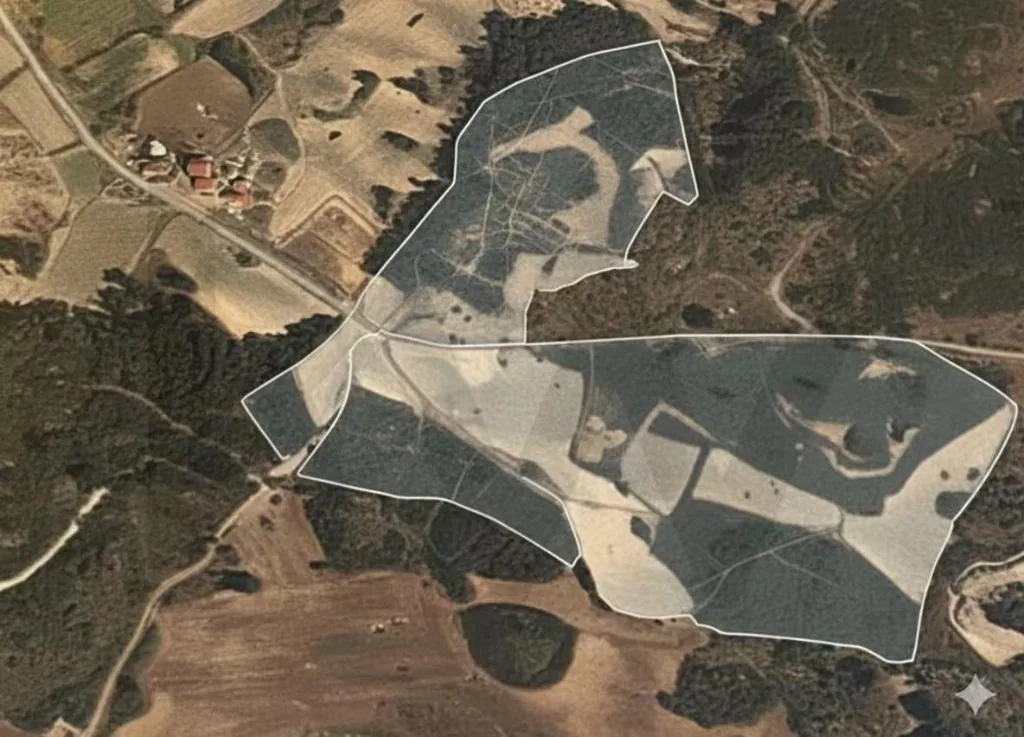
What the land allows
Room to spare for the two planned verticals, organic eggs and microgreens, with pasture for the birds, solar power and its own water. Any rise in the land's value belongs to all the passes together, through the DAO's entity. We do not project appreciation: we publish the purchase price.
2. Why our own farm
| Criterion | Investing in traditional agriculture | FarmChainDAO |
|---|---|---|
| Asset | Credit to a third-party grower. | The DAO's own land and production. |
| Supply chain | Up to 7 middlemen between the harvest and the shelf. | Direct sales to restaurants and distributors. |
| Proof | Manager reports, when they exist. | Every harvest's invoice published before any distribution. |
| Return | Fixed interest or a dividend at the manager's discretion. | 65% of net profit in USDC: 10% to the passes, 55% to the cycle slots. |
| Resources | Intensive soil use and long-distance transport. | Vertical growing with about 95% less water, and local sales. |
3. The two products
One farm, two products with different rights. The Genesis Pass is the base. The cycles are the production.
Genesis Pass
1,000 units. 275 USDC in the Seed Lot. Buys the land and base infrastructure.
1/1,000 of the land and base infrastructure
Held by the DAO's entity, with the deed published when the purchase closes.
10% of the net profit from every harvest
Split across the 1,000 passes, paid in USDC. Applies to every cycle, current and future.
1 vote per pass
Next vertical, use of the reserve, impact percentage.
Priority and a 10% discount on every cycle
Pass holders buy each vertical's slots first and cheaper.
Monthly report, in text and video
From the first month, by email and Telegram.
Seed Lot bonuses (first 350)
- Founder price locked at 275 USDC Lot 2 from 325 USDC. Lot 3 from 375 USDC.
- Your name on the founders' wall, at the farm Physical proof of who was there at the start.
- A box from the first harvest, delivered to your home Delivery within the European Union. Outside it, equivalent credit.
- A day visiting the farm With the team, on the land the pass bought.
Production cycles
Each vertical is its own product, with its own funding round.
- CAPEX published before the sale: equipment, inputs and labor for the first three months.
- 55% of the vertical's net profit to the cycle slots, for the term of the cycle (12 months in Cycle #1).
- Genesis Pass holders buy first and with a 10% discount.
- Cycle #1: organic eggs. Hens bought already at laying age, daily production, local sales. Target of a first distribution within 90 days of funding closing.
- Cycle #2: microgreens. 15-day rotation, sold to restaurants. Adds fast turnover to the daily cash from the eggs.
4. Where the money goes
No lot closes without a published budget. This chapter is updated with every lot.
Seed Lot: 350 passes × 275 USDC = 96,250 USDC
Buys the land and pays for the legal entity. What is left starts the base infrastructure.
- Land (purchase-intent contract)€85,000
- DAO legal entity and the deedbeing budgeted
- Base infrastructure: power, water, first structurebeing budgeted
Cycle #1, organic eggs
Published before the cycle slots go on sale.
- Henhouse, perches and nest boxesbeing budgeted
- 2,100 hens already at laying age, at €7.80 each€16,380
- Organic feed and labor (3 months)being budgeted
The next Genesis Pass lots (Lot 2 from 325 USDC, Lot 3 from 375 USDC) complete the base infrastructure. The price ladder is the only urgency we use.
5. Production studies
The two studies below are projections of monthly operation at full capacity, with sale prices the team already charges or has quoted. They are not results: no vertical is built yet. They are used to size each cycle and feed the simulator in chapter 6.
Organic eggs (2,100 hens)
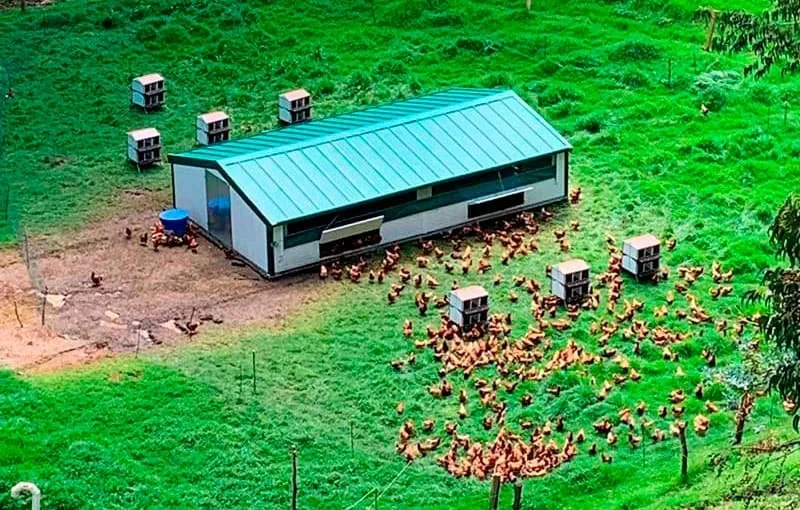
- Organic feed-€8,500
- Management, Labor & Packaging-€5,000
- Revenue (direct sales)+€22,422
- Monthly net profit+€8,922 (monthly)
Specifications
- •Cycle: Continuous laying
- •Duration: Year-round Production
- •Advantages: Daily cash flow, high demand for organic, zero-waste system.
- •Health: Omega-3 and vitamin D. Organic feed, no antibiotics.
- •Projected Capacity: 2,100 hens
- •The math: 55,440 eggs per month (2,100 × 0.88 × 30). €0.40 per egg.
Microgreens (300 racks)
- Seeds and substrate-€1,375
- Energy, Management & Labor-€3,125
- Revenue (direct sales)+€18,550
- Monthly net profit+€14,050 (monthly)
Specifications
- •Cycle: 15-day rotation
- •Duration: Year-round Cycles
- •Advantages: Highest revenue per m², fast turnover, premium restaurants.
- •Health: Up to 40 times more nutrient-dense than the mature plant.
- •Projected Capacity: 300 racks, 1,200 trays
- •The math: 2,400 trays per month (2 cycles). €7.73 per tray.
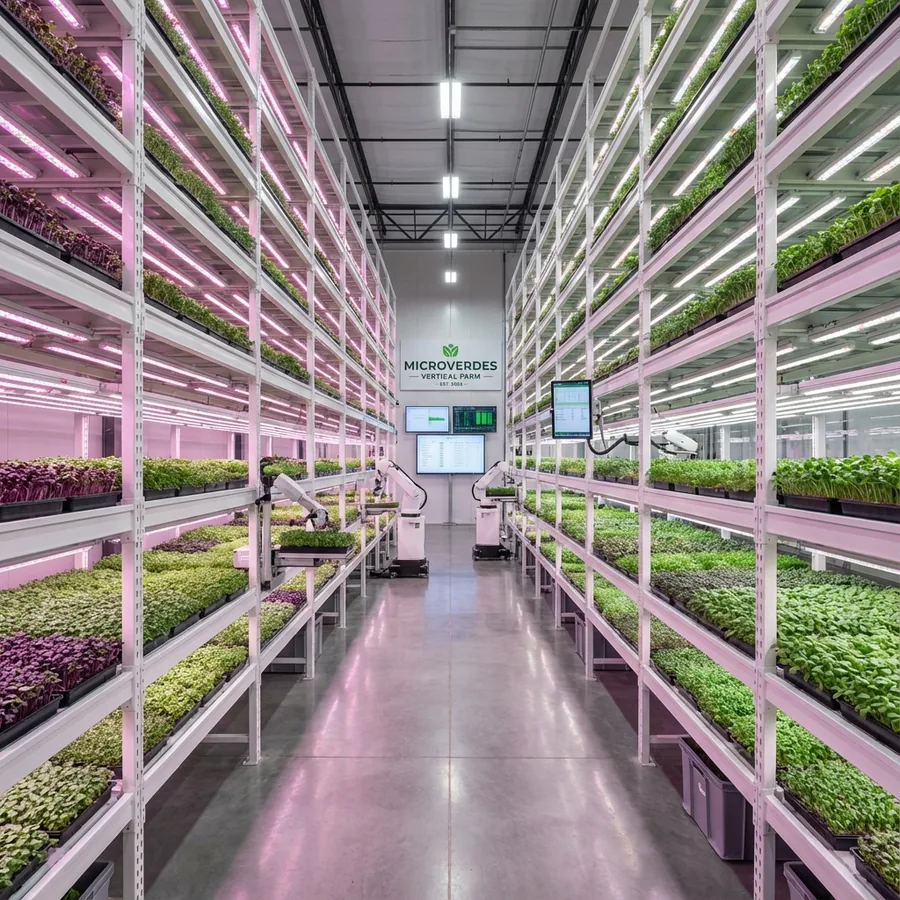
Every harvest sold publishes its invoice in the monthly report and on Telegram. No invoice, no distribution.
Simulate below with how many verticals are running and at what capacity. The numbers come from the two studies above.
6. Net profit distribution
With both verticals at full capacity, the model projects €22,972 of net profit per month (€8,922 eggs, €14,050 microgreens). Of that total: 10% to the 1,000 Genesis Passes (€2,297, or €2.30 per pass per month), 55% to the cycle slots, 13% operating reserve, 10% reinvestment, 5% DAO treasury, 5% risk fund and 2% social impact.
| Destination | % of profit | Function |
|---|---|---|
| Genesis Pass (perpetual) | 10% | Share for those who bought the land, across every cycle |
| Cycle slots | 55% | Those who funded the vertical, for the term of the cycle |
| Operating reserve | 13% | Weak months and maintenance |
| Reinvestment | 10% | Next vertical |
| DAO treasury | 5% | Legal, accounting, governance |
| Risk fund | 5% | Disease, losses, energy |
| Social impact | 2% | Meals and education, with a report |
Sanity check: €2.30 per pass per month is about €28 a year, or 11% on the €255 that 275 USDC is worth, with both verticals full and the land as backing. With only Cycle #1, eggs, running, about 4%. It is the number we publish because it is what the model supports. A project that promises more than this in farming is either lying or hiding the risk.
Scenario simulator
How much one Genesis Pass receives per month, based on the whitepaper studies. A scenario, not a promise.
$2.48
Per pass, per month
$29.77
Per pass, per year
10.8%
On 275 USDC, per year
$2.48
Your passes, per month
€12,635
Goes to the cycle slots, per month
Assumptions
- Monthly net profit at full capacity: eggs €8,922, microgreens €14,050 (whitepaper, chapter 5).
- 10% of net profit split across 1,000 passes. Reference rate: 1 EUR = 1.08 USD.
- Partial capacity reduces profit in the same proportion. A simplification: in practice, fixed costs weigh more at low capacity.
- The cycle slots (55%) are a separate product and are not included in the per-pass value.
No vertical is running today. These figures are model projections, not results.
7. Risk reversal
Three mechanisms the DAO controls. All three are under legal review and take effect, with their final wording, before the Seed Lot closes.
Minimum target with refund
If the Seed Lot does not reach 350 passes by the announced date, the USDC raised goes back to the wallets it came from. Until the target is met, the money sits in a multisig wallet with a signer from outside the team.
Published deed
The land is bought in the name of the DAO's entity and the deed is published with personal data redacted. That is what turns a purchase-intent contract into backing.
Stop clause
If there is no first distribution within 12 months of the Seed Lot closing, the passes vote on selling the assets and splitting the proceeds.
Status: under legal review. Nothing here is a securities offering. Each person is responsible for checking the rules of their own jurisdiction.
8. Social impact: 2% of profit
A fixed line in the distribution, not an intention. 2% of the net profit from every harvest, plus part of the physical produce, goes to two programs in the Fundão region:
- Tech education: workshops on coding, blockchain and vertical farming for young people, at the farm itself.
- Meals: part of the produce and of the budget becomes meals at schools and food banks.
Accountability: kilos donated, meals served and money passed on, per harvest, with receipts, in the monthly report. The percentage only changes by a pass vote.

9. FarmChain Market (future)
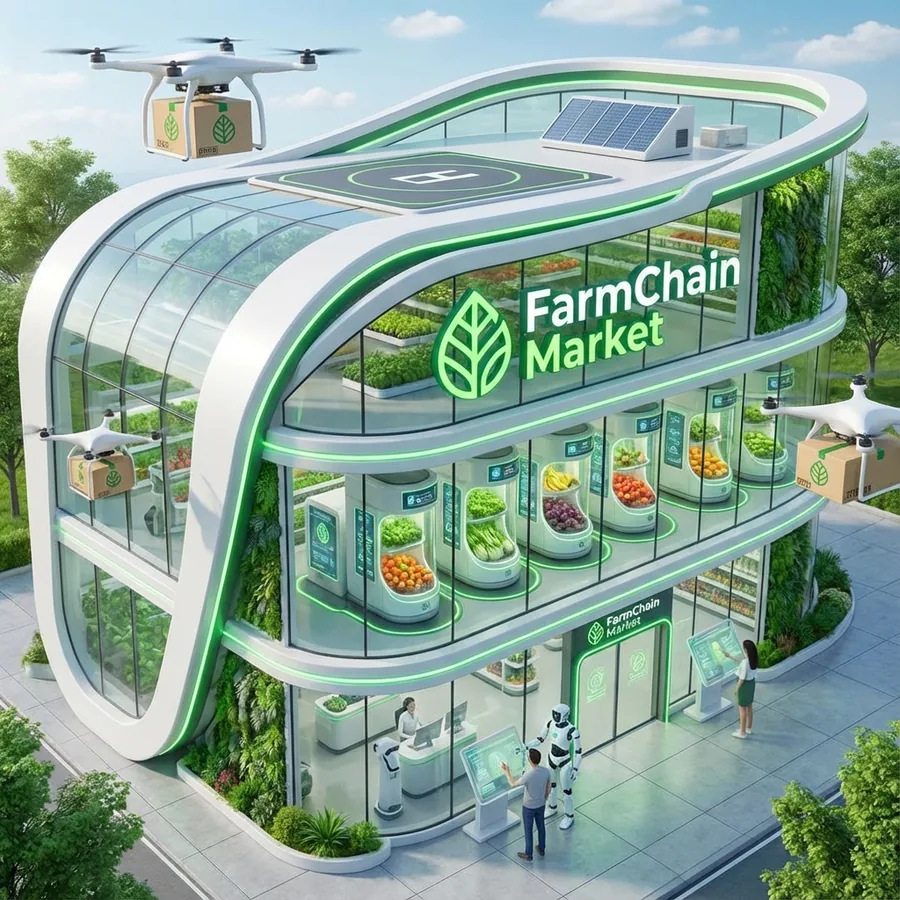
Once both verticals are running, the goal is to sell directly to consumers through our own store, capturing the retail margin. It is also where new crops come in, such as the aromatic herbs that left the current plan, if the passes vote for them. None of this is part of today's offer and none of it is included in any projection in this document.
10. Definitions
Vertical Farm Unit (VFU)
A layered growing environment with controlled climate, used in the microgreens vertical.
Production cycle
A vertical sold as its own product: funding, CAPEX, term and distribution set before the sale.
Real-world asset (RWA)
The Genesis Pass and the cycle slots represent rights over physical assets and production, recorded on-chain on Solana.
DAO
An organization in which each Genesis Pass is one vote on the decisions listed in this document, recorded on-chain.
Disclaimer: this document describes FarmChainDAO's model and targets. No figure here is a guarantee of return. Farming carries weather, pest and market risk.
mainnet-beta · 64kmLoDYJvpDhnGUpPNJZUkCgQeZgt3nmCgzjXoWa1sz
FarmChainDAO © 2026. All rights reserved.